

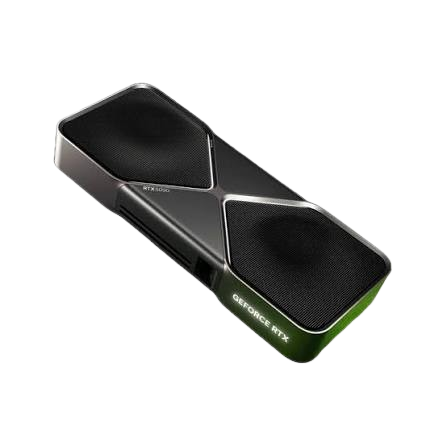
Nvidia’s RTX 50 Blackwell series has launched — RTX 5090 at $1,999, RTX 5080 at $999, RTX 5070 Ti at $749, and RTX 5070 at ~$549. DLSS 4 Multi Frame Generation delivers up to 4x framerate boost. Full specs and buyer’s guide, below.
Key Features of Nvidia RTX 50 Series
- RTX 5090: 32GB GDDR7, 21,760 CUDA cores, 600W TDP, $1,999 (official)
- RTX 5080: 16GB GDDR7, 10,752 CUDA cores, 360W TDP, $999 (official)
- RTX 5070 Ti: 16GB GDDR7, 8,960 CUDA cores, 300W TDP, $749 (official)
- RTX 5070: 12GB GDDR7, 6,144 CUDA cores, 250W TDP, ~$549 (official)
- DLSS 4 Multi Frame Generation: up to 4x framerate multiplication (official)
- New Transformer-based AI upscaling model — sharper than CNN-based DLSS 3
Nvidia RTX 50 Series — Quick Overview
| Status: Officially launched — available now Expected/Released: Available now globally OS: N/A Storage: N/A |
 |
RAM N/A |
Camera N/A |
Battery N/A |
Key Points of RTX 50 Series
- DLSS 4 Multi Frame Generation: Generates 3 AI frames for every 1 rendered — up to 4x FPS multiplier. Works on all RTX 50 series cards.
- GDDR7 Across All Tiers: Faster memory bandwidth than GDDR6X — benefits both gaming and AI workloads.
- Transformer AI Model: DLSS 4 switches from CNN to Transformer architecture — produces sharper, more temporally stable upscaling.
- RTX 5070 Ti Best Value: Performs within 10–15% of RTX 5080 at $250 less — strongest price-to-performance of the generation.
- 5th-Gen Tensor Cores: New silicon enabling real-time ray reconstruction and path tracing at previously impossible frame rates.
DLSS 4 Multi Frame Generation — Explained
DLSS 4’s Multi Frame Generation is the defining feature of the Blackwell generation. Previous DLSS 3 generated one extra frame per rendered frame (2x multiplication). DLSS 4 MFG generates up to three additional frames — multiplying output framerate by up to 4x. At 4K with DLSS 4 Quality mode enabled, a game rendering at 40 FPS natively can output 160+ FPS to the display.
The caveat is input latency — generated frames represent past positions, adding lag between input and visual response. Nvidia Reflex, included in all RTX 50 series drivers, reduces system latency to compensate. In practice, total system latency with DLSS 4 MFG and Reflex enabled is lower than playing without DLSS 4 at all, due to the higher effective framerate.
RTX 5090 — For Creators and Extreme Users
The RTX 5090 is the fastest consumer GPU ever manufactured — 32GB GDDR7 and 21,760 CUDA cores make it essential for AI research, 3D rendering, and 8K video editing. For gaming alone, the $1,999 price is difficult to justify when the RTX 5080 delivers 85–90% of the same gaming performance at $999. The 600W TDP requires a high-end PSU (1000W+) and excellent case airflow — a meaningful system build consideration.
RTX 5080 — The Serious 4K Card
At $999, the RTX 5080 is the card for serious 4K gamers who want maximum native performance without reaching $2,000. 16GB GDDR7 is sufficient for all current and near-future AAA titles at 4K. The 360W TDP is manageable on a quality 850W PSU and fits most full-tower and mid-tower cases without significant airflow challenges.
RTX 5070 Ti — The Value Champion
The RTX 5070 Ti at $749 is the GPU recommendation for most PC builders in 2026. It delivers 4K gaming at 60+ FPS natively and 120+ FPS with DLSS 4 Quality in virtually every current title. The performance gap versus the RTX 5080 is 10–15% in most games — a $250 premium for that margin is hard to justify unless you specifically need the extra headroom for future-proofing.
RTX 5070 — The 1440p and Budget 4K Card
At approximately $549, the RTX 5070 is the gateway into Blackwell architecture for users who primarily game at 1440p. With DLSS 4 MFG enabled, 4K gaming at 60–100+ FPS is achievable in most titles. The 12GB GDDR7 is sufficient for 4K gaming today but may become a constraint in two to three years as VRAM requirements increase.
RTX 50 Series Buyer’s Guide
| RTX 5090 — $1,999 | Best for: AI researchers, 3D animators, 8K content creators. Overkill for gaming only. |
| RTX 5080 — $999 | Best for: Serious 4K gamers who want maximum native performance without $2K spend. |
| RTX 5070 Ti — $749 ⭐ Best Value | Best for: Most PC gamers. 4K@144Hz with DLSS 4. Best price-to-performance of the generation. |
| RTX 5070 — ~$549 | Best for: 1440p gamers and budget 4K builders. Strong value with DLSS 4 support. |
Who Should Consider RTX 50 Series
Any PC gamer building or upgrading a system in 2026 should target the RTX 50 series — the DLSS 4 Multi Frame Generation advantage is generational, not iterative. RTX 40 series owners who game at 4K and want to push 144Hz will find the RTX 5070 Ti to be the most cost-effective upgrade path. RTX 30 series owners at any resolution will find the performance jump transformative.
Should You Buy RTX 50 Series Now?
Yes — if you are building a new PC or upgrading from RTX 30 series or earlier. RTX 40 series owners need to evaluate more carefully: the DLSS 4 MFG upgrade is real but may not justify the full upgrade cost if you are already gaming at high framerates. Wait for prices to stabilise post-launch before buying RTX 5090 specifically — initial stock constraints have kept prices above MSRP in many markets.
Nvidia RTX 50 Series Full Specifications
RTX 50 Series Comparison Table
| Model | RTX 5090 / RTX 5080 / RTX 5070 Ti / RTX 5070 |
| CUDA Cores | 21,760 / 10,752 / 8,960 / 6,144 |
| VRAM | 32GB / 16GB / 16GB / 12GB GDDR7 |
| TDP | 600W / 360W / 300W / 250W |
| Official Price | $1,999 / $999 / $749 / ~$549 |
| DLSS 4 MFG | Yes — all models supported |
Pricing & Pakistan Availability
RTX 50 series GPUs reach Pakistan through grey market importers. Based on current import rates, Pakistan grey market pricing is approximately: RTX 5070 ≈ PKR 200,000–240,000, RTX 5070 Ti ≈ PKR 280,000–320,000, RTX 5080 ≈ PKR 380,000–430,000, RTX 5090 ≈ PKR 700,000–800,000+. Prices fluctuate with USD/PKR exchange rate and available stock.
Final Verdict
The Nvidia RTX 50 Blackwell series is the most significant GPU generational leap since RTX 30 series. DLSS 4 Multi Frame Generation changes the performance calculus at every price point, and the move to GDDR7 across all tiers future-proofs the lineup. The RTX 5070 Ti at $749 is the clear recommendation for most buyers — delivering 4K gaming performance that would have cost $1,500+ two years ago.
Disclaimer: RTX 50 series is officially launched. Pricing is confirmed at US MSRP. Pakistan grey market pricing estimates are based on typical import premiums and may vary.
FAQ’s
What GPUs are in the RTX 50 series?
RTX 5090, RTX 5080, RTX 5070 Ti, and RTX 5070 — all officially launched by Nvidia.
What is DLSS 4 Multi Frame Generation?
DLSS 4 MFG generates up to 3 additional AI frames for every 1 rendered frame — multiplying effective framerates by up to 4x at supported resolutions.
Which RTX 50 GPU is best value?
The RTX 5070 Ti at $749 — performs within 10–15% of the RTX 5080 at $250 less. Best price-to-performance of the generation for 4K gaming.
How much does RTX 5090 cost?
$1,999 USD — officially confirmed by Nvidia at launch.
Does DLSS 4 add input lag?
Yes — DLSS 4 MFG adds some latency. Nvidia Reflex compensates effectively when enabled, keeping total system latency competitive.
What memory does RTX 50 series use?
GDDR7 across all models — RTX 5090 has 32GB, RTX 5080 has 16GB, RTX 5070 Ti has 16GB, and RTX 5070 has 12GB.
Pakistan price for RTX 5070 Ti?
Expect PKR 280,000–320,000 via grey market importers. Prices vary with USD/PKR exchange rate.
Is RTX 5090 worth it for gaming?
For gaming alone, no — RTX 5080 at $999 delivers 85–90% of 5090 gaming performance at half the price. RTX 5090 is worth it for AI workloads and content creation.
Can RTX 5070 run 4K gaming?
Yes — with DLSS 4 Quality and Multi Frame Generation enabled, RTX 5070 can achieve 120+ FPS at 4K in most current titles.
What is the TDP of RTX 5090?
600W — requiring a 1000W+ PSU and proper case airflow. A significant system build consideration.